2026-09-19 · Dale Mercer
Signs Your Water Heater Is Failing
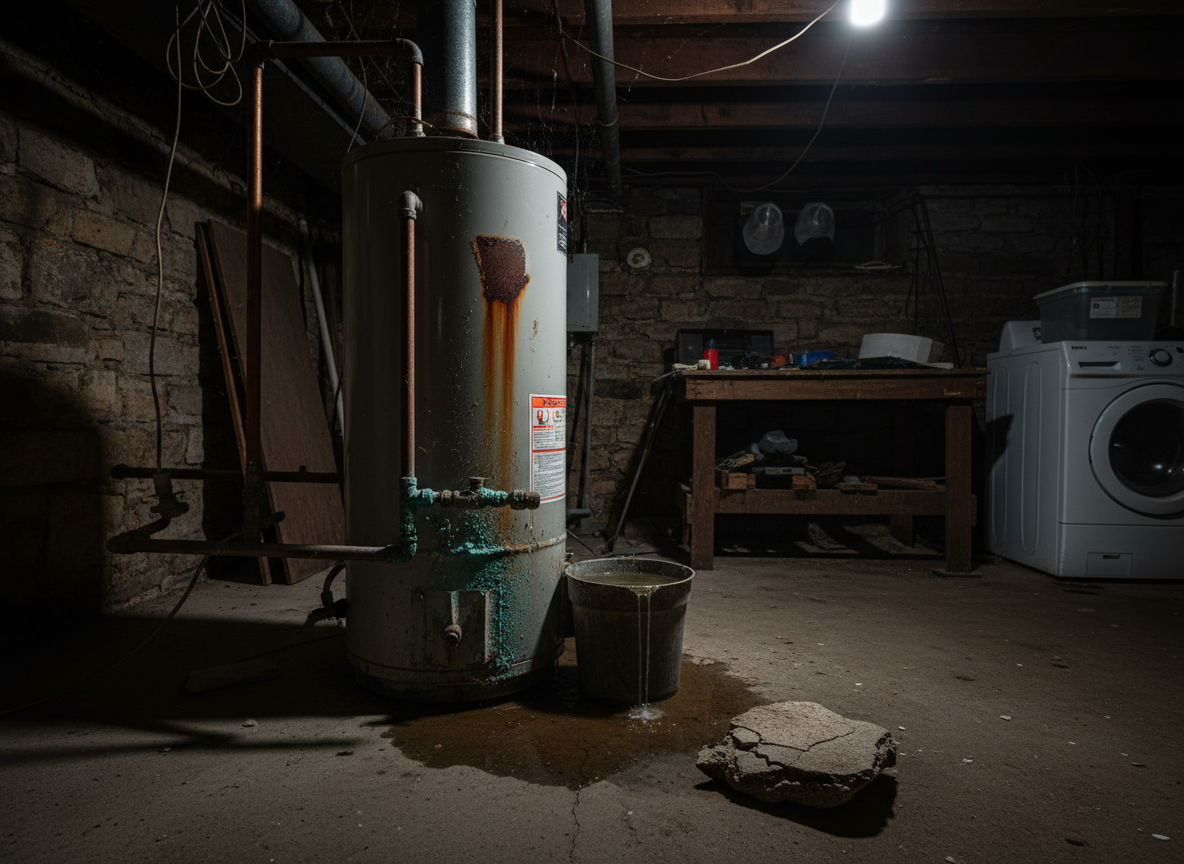
Water heaters serving homes in Johnstown typically begin failing after 8–12 years through rusty water, popping noises, temperature swings, or visible moisture around the tank base. These patterns show up regularly in Weld County properties exposed to semi-arid summers and variable groundwater minerals.
Rusty or Discolored Water
Homeowners in Downtown Johnstown and nearby Milliken frequently notice brown or metallic-tinged water first. This occurs when internal tank corrosion releases sediment into the supply line. In Weld County’s semi-arid climate, hotter summer months accelerate mineral scaling that speeds up rust formation. Check both hot and cold taps; if discoloration clears after several minutes it still points to tank degradation rather than supply issues. Persistent rust often precedes leaks and requires prompt attention to avoid staining fixtures throughout the house.
Strange Noises from the Tank
Sediment layers that settle at the bottom of tanks in Loveland-area homes create rumbling or popping sounds during heating cycles. The semi-arid conditions around Johnstown concentrate minerals that harden into scale, trapping steam and forcing the burner or element to work harder. These noises grow louder over weeks and signal that flushing has been neglected. Left unaddressed, the buildup reduces efficiency and can crack the tank lining well before the expected 10-year mark.
Inconsistent Hot Water Supply
Temperature fluctuations appear when heating elements or gas burners fail to keep up with demand in larger Weld County households. A 40-gallon unit that once delivered steady 120-degree water may now run cold midway through a shower. Hot summers increase overall usage for laundry and cleaning, exposing weak thermostats earlier. Track how long hot water lasts at each fixture; sudden drops usually trace back to failing components rather than pipe insulation problems.
Visible Leaks or Moisture
Puddles or dampness around the tank base often start small near the temperature-pressure relief valve or bottom seams. In Johnstown’s dry climate, even minor leaks evaporate quickly outdoors yet still corrode the floor and nearby drywall inside utility rooms. Moisture trails running down the sides indicate internal liner failure. Address these immediately because continued seepage can damage surrounding structures and raise humidity levels in enclosed spaces.
Age and Sediment Buildup
Units installed before 2015 in neighborhoods like Pioneer Ridge commonly reach the end of reliable service between 8–12 years. Local water carries enough dissolved solids that annual flushing becomes necessary to maintain performance. Without it, scale insulates the heating surface and forces the unit to run longer cycles. Residents near St. Vrain State Park report faster buildup due to slightly harder groundwater compared with other parts of northern Colorado.
For detailed steps on removing accumulated sediment, review the guide on Water Heater Sediment Buildup. If moisture appears, the Leaking Water Heater Repair page outlines typical repair scopes. Routine Water Heater Maintenance & Flushing performed every 12 months helps extend service life in local conditions.